
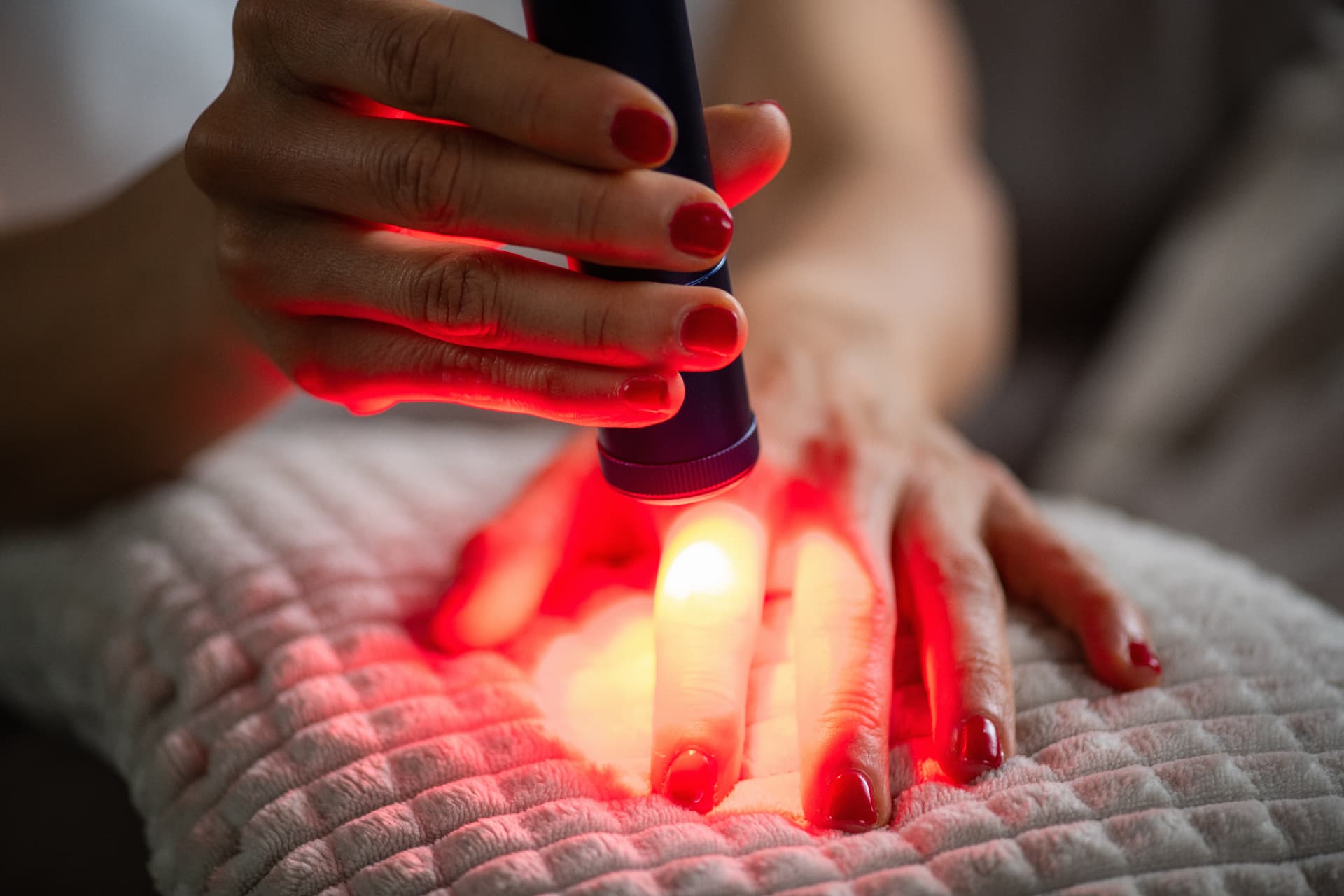
Red light therapy will not erase pain, but for many people it can quiet it, gently and without drugs. Pain is one of the body's oldest messengers. It tells us something needs attention. Yet when pain lingers long after its message has been delivered, it wears on the body, the mood and the spirit. That is why so many people are now turning to a surprisingly simple tool: light.
What Red Light Therapy Does
Red light therapy, known clinically as photobiomodulation, uses red (roughly 630–670 nm) and near-infrared (roughly 800–880 nm) wavelengths to reach into tissue. Red light works closer to the surface. Near-infrared travels deeper, into muscle and around joints.
Inside our cells, this light is absorbed by the mitochondria, the tiny power plants that make energy. Researchers believe the light helps cells produce energy more efficiently, eases inflammation and improves local circulation. Think of it as nudging tired, inflamed tissue back toward its natural rhythm of repair. Unlike heat lamps, a proper dose does not burn or warm the skin much at all.
Types of Pain and Where It Helps
Not all pain is the same, and light does not help every kind equally.
- Musculoskeletal pain. Sore muscles, strains, tendon irritation and low back pain have shown encouraging results in some studies. Athletes use it for recovery between workouts.
- Joint pain. Knee osteoarthritis has a growing body of supportive studies. Many people report less stiffness and easier movement.
- Inflammatory pain. Conditions driven by local inflammation, such as plantar fasciitis or tendinitis, may respond, likely because the light calms the inflammatory process.
- Nerve pain. Early research on neuropathy, including in the feet, is promising but still mixed.
- Chronic, widespread pain. For conditions like fibromyalgia, results vary. Light may be one helpful thread in a larger tapestry of care.
Acute injuries and wound healing may also benefit, which is why some physical therapists and dentists use it in their offices.
How to Use It: How Often and How Long
Consistency matters more than intensity. With light therapy, more is not better. Much of the research used clinical lasers; home LED devices are gentler, which is one more reason consistency matters.
- Choose a quality device. Look for listed wavelengths and power output, or ask a trained practitioner which devices they trust.
- Target the area. Place the panel or pad over the painful spot, usually 6 to 12 inches away for panels, or directly on the skin for wraps, per the maker's guidance.
- Keep sessions short. Most protocols run about 10 to 20 minutes per area.
- Be regular. Three to five sessions a week for several weeks is common. Many people notice change within two to four weeks.
- Protect your eyes. Wear the goggles provided, especially with bright panels. Unprotected eyes can be damaged.
Pair each session with slow, steady breathing. Let the time under the light become a pause for the nervous system, not just the tissue.
Guidance for Your Unique Situation
Every body, and every pain, tells its own story. In my practice, I offer red light sessions and guide each client toward the approach, timing and frequency that will best serve their situation.
For those who prefer to use red light in the privacy of their own home, I have vetted equipment from around the world and can help you choose a device that fits your needs. You don't have to sort through confusing claims alone. I bring the experience, training and knowledge to make red light therapy an easy, confident part of your self-care.
Disclosure: I'm an affiliate of some of the brands I recommend, so if you buy a device through me, I may earn a commission at no extra cost to you. I only recommend equipment I use myself.
Cautions: Who Should Avoid It, and a Closing Reflection
Red light therapy is considered low risk, but it is not for everyone. Avoid shining it over known or suspected cancers, the thyroid or a pregnant abdomen. Check with your provider if you take light-sensitizing medications or have an eye condition. Persistent or worsening pain always deserves a medical evaluation.
Light is a reminder that healing often comes through gentle, steady inputs rather than force. As you sit beneath it, ask yourself: What is my pain asking me to notice? Where in my life could I offer myself the same patient, consistent care?
Questions people ask about red light therapy for pain
Does red light therapy help with pain?
For many people it can quiet pain, gently and without drugs, though it won't erase it. Knee osteoarthritis has a growing body of supportive studies, and muscle and tendon pain have shown encouraging results in some studies. Research on nerve pain is promising but mixed, and results for widespread pain like fibromyalgia vary.
How often should you do red light therapy for pain?
Three to five sessions a week for several weeks is common. Consistency matters more than intensity: with light therapy, more is not better.
How long should a red light therapy session be?
Most protocols run about 10 to 20 minutes per area, with panels usually 6 to 12 inches from the skin and wraps placed directly on it, per the maker's guidance.
How long does red light therapy take to work?
Many people notice change within two to four weeks of regular sessions.
Who should not use red light therapy?
Avoid shining it over known or suspected cancers, the thyroid or a pregnant abdomen. Check with your provider if you take light-sensitizing medications or have an eye condition, and always protect your eyes. Persistent or worsening pain deserves a medical evaluation.
Take the next step. Pain is often one thread in a larger pattern of strain. The free Effortless quiz takes about a minute. It names the pattern that's been quietly costing you energy and sends you a short guided meditation made for it. Take the free quiz →