
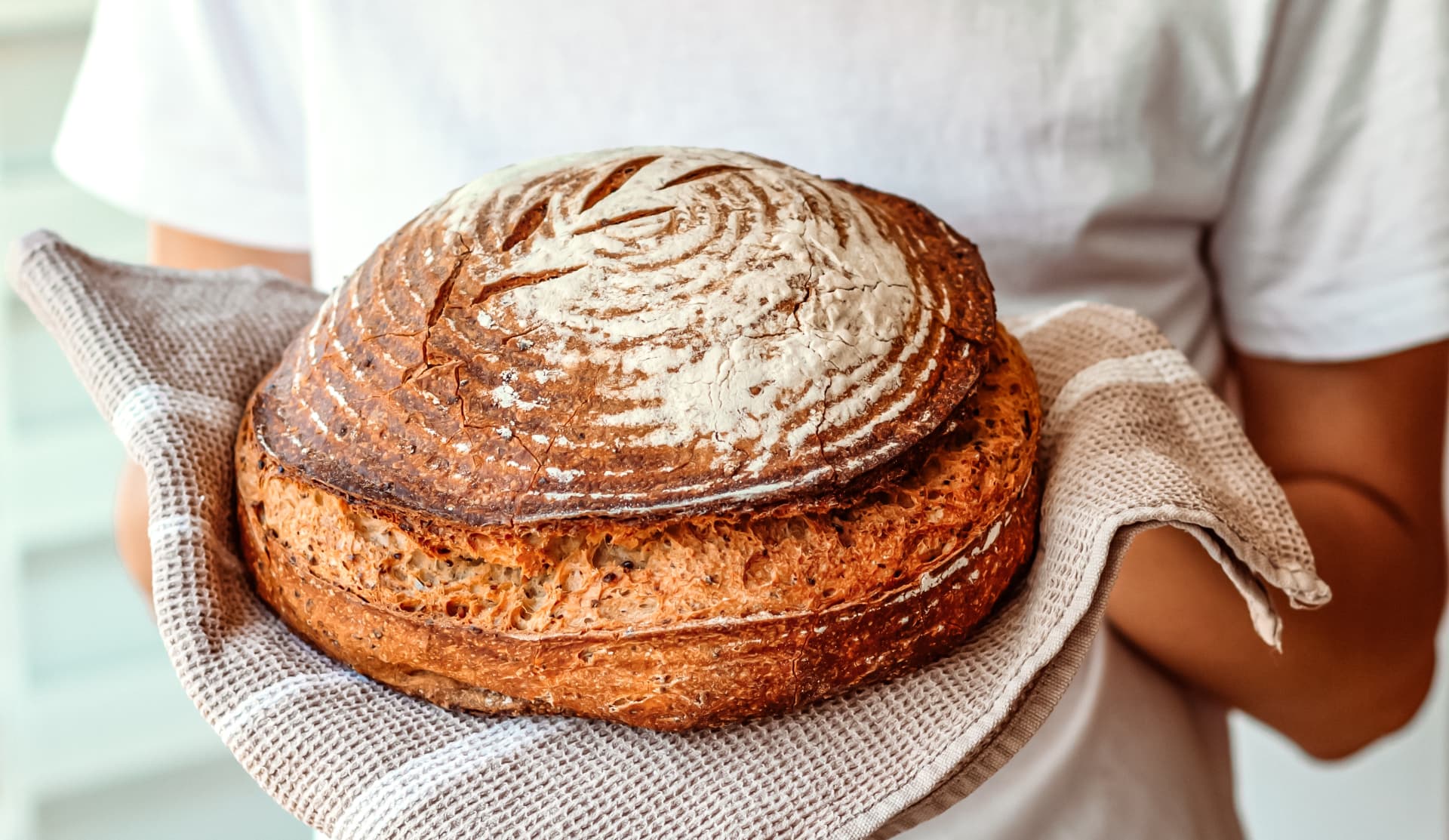
If you've scrolled social media lately, you've probably seen sourdough described as a superfood that lowers blood sugar, heals your gut, and unlocks every nutrient on your plate. The truth is gentler and more useful. Traditionally made sourdough is one of the best breads you can choose. Understanding why helps you make good choices no matter which bread ends up on your table.
When I was growing up on the farm, bread was made so often that there was no need for preservatives. We made many different kinds. Yes, we made loaf bread for sandwiches, but we also made biscuits and hoecake, and we made bread from other ingredients besides wheat flour. There was a lot of cornbread, and sometimes we even made it from white grits. Those ingredients let us shape the bread to every meal. Did we want it savory? Did we want fruit in it? Did we want to shape it for whatever we were doing? Making bread was just as much a part of planning a meal as anything else on the table.
What Makes Sourdough Different
True sourdough is one of humanity's oldest foods: flour, water, salt, and a living starter of wild yeasts and lactic acid bacteria. Over a long fermentation, often 12 to 24 hours, those microbes transform the dough before it ever reaches the oven. That slow process is where the benefits come from.
Gentler on blood sugar for many people. The natural acids produced during fermentation can slow digestion, so some people see a smaller rise in blood sugar than with soft white sandwich bread. Sourdough doesn't lower blood sugar, though. Every bread raises it, and responses vary from person to person. Pairing bread with protein, healthy fat, or fiber makes a bigger difference than the bread alone.
More available minerals. Grains contain phytic acid, which binds minerals like iron, zinc, and magnesium. Long fermentation breaks much of it down, so your body can access more of those nutrients. In one study of whole wheat bread, sourdough fermentation cut phytate by 62 percent, compared with 38 percent for ordinary yeast. The benefit is greatest when the sourdough is made with whole-grain flour.
Easier to digest for some. Fermentation breaks down certain carbohydrates (fructans) that can cause bloating in sensitive people. Many who feel heavy after ordinary bread find sourdough sits more comfortably. One important caution: sourdough still contains gluten. It is not safe for anyone with celiac disease.
Naturally preserved. The acids help sourdough resist mold, so a real loaf needs no added preservatives.
Not a probiotic. As for gut health, baking kills the live microbes, so sourdough isn't a probiotic. Its gut-friendly value comes mostly from fiber, which is another reason whole-grain versions shine.
Not All "Sourdough" Is Sourdough
Many supermarket loaves labeled sourdough are ordinary yeasted bread with vinegar or "sourdough flavor" added. Read the label. Real sourdough has a short ingredient list and no commercial yeast. A local baker who ferments slowly is often your best source.
Other Healthy Breads Worth Knowing
Sourdough isn't the only wise choice. If you eat bread, these are also excellent:
- Sprouted-grain breads. Sprouting partially breaks down starches and phytic acid, much like fermentation.
- Dense whole-grain or rye breads. Traditional rye and pumpernickel are rich in fiber and often fermented as well.
- 100% whole-wheat breads. Choose ones with whole grain listed first and little or no added sugar.
The common thread is whole grains, minimal ingredients, and time-honored methods.
The Gluten-Free Question
Gluten-free doesn't automatically mean healthy. Many gluten-free breads are made mostly from refined white rice flour, tapioca, and potato starch, plus sugar and gums to hold them together. They can spike blood sugar more than the wheat bread they replace and offer little fiber.
If you need to avoid gluten, look for breads built on whole, nourishing ingredients:
- Whole-grain gluten-free flours such as buckwheat, millet, sorghum, teff, brown rice, or quinoa
- Seed-based breads made with flax, chia, psyllium, or sunflower seeds
- Gluten-free sourdough, which offers some of the same fermentation benefits
- Simple swaps like 100% corn tortillas, sweet potato "toast," collard or lettuce wraps, and seed crackers
Read labels with the same eye: whole ingredients first, fiber present, and sugar low.
A Mindful Approach to Bread
Bread has nourished families, cultures, and communities for thousands of years. It can be part of a healthy life when chosen with awareness and eaten with intention.
Next time you reach for a slice, pause and ask yourself three questions:
- What is this made from?
- How was it made?
- How does my body feel after I eat it?
Your answers, especially the third, are wiser than any viral post. (Listening to that third answer is the heart of what it means to live effortlessly.) Real sourdough is a wonderful place to start. The best bread for you is the one that honors both good ingredients and your own body's response.
Questions people ask about sourdough
Is sourdough bread healthy?
Traditionally made sourdough is one of the best breads you can choose. Long fermentation can make it gentler on blood sugar for some people, makes minerals more available, and breaks down carbohydrates that can cause bloating. It isn't a superfood, though, and the benefits are greatest with whole-grain flour.
Is sourdough gluten-free?
No. Sourdough made with wheat, rye or spelt still contains gluten and is not safe for anyone with celiac disease. Gluten-free sourdough made from gluten-free flours is a separate product.
Does sourdough raise blood sugar?
Yes. Every bread raises blood sugar, and sourdough doesn't lower it. The acids from fermentation can slow digestion, so some people see a smaller rise than with soft white bread. Pairing bread with protein, healthy fat, or fiber makes a bigger difference than the bread alone.
Does sourdough have probiotics?
No. Baking kills the live microbes, so sourdough isn't a probiotic. Its gut-friendly value comes mostly from fiber, which is why whole-grain sourdough shines.
How can you tell if sourdough is real?
Read the label. Real sourdough has a short ingredient list (flour, water, salt and starter) and no commercial yeast. Loaves with added yeast, vinegar or "sourdough flavor" are imitations.
What is the healthiest bread?
Look for whole grains, minimal ingredients, and time-honored methods: real sourdough, sprouted-grain bread, dense whole-grain or rye bread, or 100% whole-wheat bread with little or no added sugar.
Take the next step. Your body's response to food is information, and so is the way you feel in the rest of your life. The free Effortless quiz takes about a minute. It names the pattern that's been quietly costing you energy and sends you a short guided meditation made for it. Take the free quiz →