I was a sickly child in the country.
That combination matters. Sickly, and far from town. Allergies that closed my eyes and settled in my ears, and a doctor who was a drive away and seen when it was bad enough to warrant the trip.
Which meant that most of the time, what happened to my body happened at home. Between visits, I was what there was.
I don't think I understood at eight years old that I was learning something. But I was. I was learning that a body is something you tend, not something you take in for repairs — and that nobody was going to do the tending for me.
I have spent the rest of my life on that question. Sixty-five years, a doctorate, and more training programs than I can list, all circling the same three things:
- How can I take better care of myself?
- How can I be preventative instead of reactive?
- How can I anticipate what my body needs — before it has to shout?
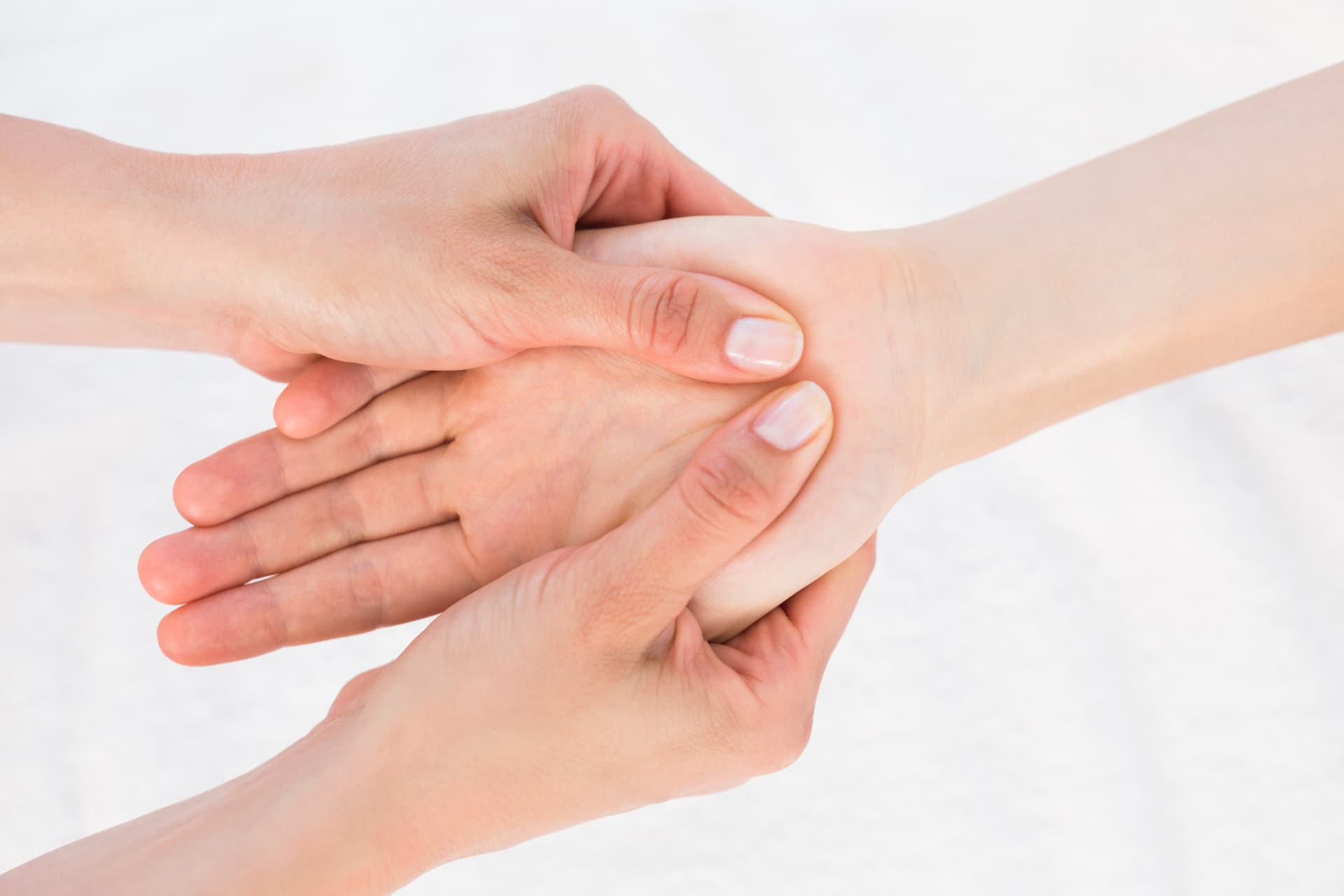
Meridian work has been part of that answer for a very long time. It's not the whole of it. But it's the part I reach for most often, because it asks for nothing I don't already have: two hands, thirty seconds, and the willingness to pay attention before there's a problem.
Let me explain it plainly, and then give you the specific points I actually use — not a catalog, the handful that have earned their place over decades.
What a Meridian Is
A meridian is a line on a map of the body.
Chinese medicine, developed over roughly two thousand years, describes twelve main channels running the length of the body, each associated with an organ. Along those channels sit several hundred points, each with a name and a number.
Here is the part most articles won't tell you, and I'd rather you hear it from me.
If you dissect a body, you will not find a meridian. No tube, no cord, no structure. Anatomists have looked. The map does not correspond to a physical thing the way the circulatory system does.
I say that because you deserve to know what you're working with, and it doesn't undercut the practice. And because the honest version is more interesting than the sales pitch.
Think of lines of latitude. There is no rope stretched around the earth at the fortieth parallel. The line is a human invention — and it is genuinely useful. It tells you something real about where you are and what the weather will do. You can navigate by it.
The meridian map is like that. A system of description, built over centuries by people paying extraordinarily close attention to bodies, that turns out to be a practical way of finding spots worth pressing. Whether the explanation attached to it is literally true matters less, for our purposes, than whether the spots do anything.
Why This Tradition, of All of Them
I've studied a great many systems. Ayurveda, which I wrote my dissertation inside. Yoga. Energy psychology. Western nutrition and exercise science.
Meridian work holds a particular place for me, and it's because of my second question.
Classical Chinese medicine is organized around prevention in a way almost nothing in Western practice is. There's a line in the foundational text — the Huangdi Neijing, compiled some two thousand years ago — that I have never gotten out of my head. It says that treating an illness after it has developed is like digging a well after you've become thirsty, or forging weapons after the battle has started.
The superior physician, the text says, treats what has not yet happened.
I read that in my forties and felt caught out. I was running an international company at the time and treating my own body exactly the way the text describes — waiting for the thirst, then digging frantically.
A system whose highest aim is maintenance was the thing I had been looking for since I was eight years old and couldn't name.
That's the honest reason I've stayed with it. Not because the theory is proven. Because the orientation is right.
A Short History
The Neijing already describes the channels, the points, and the theory. The system spread into Korea, Japan, and Vietnam, each developing variations — Japanese shiatsu, which many Americans have had without knowing its lineage, often works this same map with pressure instead of needles.
America largely ignored all of it until 1971, when a New York Times reporter named James Reston had an emergency appendectomy in Beijing and wrote about the acupuncture he received for pain afterward. The column caused a sensation. American interest essentially begins there. The timing mattered: President Nixon visited China the following February, and his physician, Dr. Walter Tkach, came home and wrote about watching acupuncture work for Reader's Digest.
Today the map turns up in more places than you'd expect. Licensed acupuncturists. Shiatsu and acupressure practitioners. Hospitals offering acupuncture for chemotherapy nausea and post-surgical pain. Athletic trainers and physical therapists working pressure points whose locations overlap with the classical ones under different names. Qigong and tai chi. The tapping you may have seen online.
What the Research Actually Shows
The honest summary, because you'll meet the argument eventually.
Acupuncture has been studied extensively, and for chronic pain the better analyses find it outperforms no treatment. The effects are modest but real.
The live controversy is about specificity. In many trials, "sham" acupuncture — needles in the wrong places, or not inserted at all — performs nearly as well as the real thing. Researchers are still arguing about what that means. Some read it as evidence the points don't matter. Others note that sham acupuncture still involves touch, attention, and someone taking your body seriously, which are not nothing.
Where does that leave you and your two hands?
Here: something real happens when you press firmly on your own body, breathe deliberately, and pay attention for thirty seconds. That isn't in dispute. Whether the benefit travels along a kidney channel or through touch, breath, posture, and attention — I don't know, and anyone certain is overselling.
But self-massage is free, takes seconds, carries essentially no risk, and feels good. The bar for trying it is very low. Keep the map, hold the theory loosely, and judge it by what happens in your own body.
The Points I Actually Use
Five, chosen by decades of use.
1. K-27: The Morning Point
Where. Put a finger in the notch at the base of your throat. Slide down about an inch to the top of the breastbone, then out to each side roughly two thumb-widths. You'll find soft hollows just under the collarbones. They're almost always a little tender; most people say "oh" when they find them.
How. Firm slow circles or light tapping, twenty to thirty seconds, breathing out longer than you breathe in. Chest open, not hunched over your hands.
Mine. Before I'm properly out of bed. Before coffee, before the phone, before the day has an opinion about me. More than a decade of it, and I notice its absence more than its presence — which is how you know a practice has become part of your foundation rather than a treatment.
In the classical system it's the final point of the kidney channel, associated with vitality and reserve. K-27 tapping is also part of the opening step of Donna Eden's Daily Energy Routine, which is where many people first meet it. What I can say with more confidence is what's physically true there: it sits over the upper lobes of the lungs, just beside the joint where the collarbone meets the breastbone, a spot that stiffens in many people, and it's hard to reach without lifting your hands to your chest and drawing your shoulders back — which opens your breathing before you've done anything else.
Alertness without stimulation. An open chest. A way of arriving. I use it before I walk into a room, after a hard phone call, and every morning of my life.
2. ST-36: The Longevity Point
Where. Four finger-widths below the bottom of the kneecap, one finger-width to the outside of the shinbone. Flex your foot and you'll feel the muscle rise under your fingers.
How. Firm circles with your thumb, thirty seconds each leg.
Mine. This is the most purely preventive point in the tradition, and the one that best answers my third question. In Japan it has been used for general health maintenance for centuries, simply as upkeep. The classical texts associate it with digestion, stamina, and long life.
I started using it in my fifties, honestly, because of the name.
I've kept it for more than twenty years for a better reason. It's the only point in my routine that isn't for anything. I do it the way you'd check the oil: because that's how you keep something running.
It was also, I realize looking back, the first point I ever used purely as maintenance. Every point I'd used before it had been an answer to something that had already gone wrong. Twenty-odd years in, I value that distinction more than I did at the start.
3. P-6: The Travel Point
Where. Inside of the forearm, two to three finger-widths up from the wrist crease, between the two tendons you can feel running down the middle.
How. Firm pressure with your thumb, thirty seconds, either wrist.
Mine. I built an international company and grew it into fifty-four countries, which meant a very great deal of time in the air. This is the point behind motion-sickness wristbands, and it has the strongest research evidence of any point I know for one specific thing: nausea.
I use it on descent, in cars on mountain roads, and on the second day in a new country when nothing has agreed with me yet. Of everything in this article, it's the one I'd hand to a skeptic first — because there's real evidence behind it, and they can test it themselves on the next bad flight.
4. LI-4: The Long-Day Point
Where. The fleshy web between thumb and index finger, at the highest point when you bring them together.
How. Squeeze firmly between the thumb and finger of your other hand. It should be distinctly tender. Thirty seconds, both hands.
Mine. The boardroom point, for me. Four decades of long negotiations, long flights, and long days of holding my face in a particular arrangement. Traditionally used for tension in the head and face, and it's the one I reach for when I can feel a day settling into my temples.
I can also do it under a table without anyone noticing, which in my former line of work was not a trivial feature.
Important: avoid during pregnancy. The tradition is firm about this point and there's no reason to test it.
5. Yintang: The Settling Point
Where. Between the eyebrows, just above the bridge of the nose.
How. Slow, light circles with one fingertip. A full minute if you have it.
Mine. This is the one I used in the hardest years — the waiting-room years, when someone I loved was ill and there was a great deal of sitting and very little doing.
It asks almost nothing. One finger, slow circles, and a place to put your attention that isn't the clock. I don't claim it changed any outcome. It kept me company.
A Few Cautions
Don't work over broken skin, infection, inflammation, varicose veins, or recently injured tissue. If pressing something produces sharp pain, stop. If you're pregnant, ask a qualified practitioner which points to avoid.
And the one that matters most, from someone who grew up in a house where the doctor was a drive away: if you have a symptom that worries you, go. Press all the points you like afterward. I hold a doctorate in Integrative Holistic Health, not a medical degree, and self-care is a companion to real medical care, never a substitute for it.
That distinction is not a disclaimer I'm obliged to write. It's the thing I actually believe. The child I was needed antibiotics and needed something to do with her own hands. Both. Always both.
Where to Start
Start with one point.
- Tomorrow morning, before anything else, find the two hollows under your collarbones.
- Press. Small circles.
- Breathe out slowly. Count to twenty.
- Then notice what actually changed, rather than what you hoped would happen.
Do that every morning for a week before you add anything or decide anything. Your own body is better evidence than I am, and it's the only evidence that was ever going to matter.
And then, if you want the real benefit of all this, ask yourself the questions that have run my whole life. Instead of "what's wrong with me today," these three:
- How can I take better care of myself?
- How can I be preventative rather than reactive?
- How can I anticipate what my body needs, before it has to shout?
I'm seventy-three and still answering them. That's not a failure to arrive. That's what the questions are for.
Questions People Ask About Meridians and Acupressure
What are the meridians of the body?
Chinese medicine describes twelve main channels running the length of the body, each associated with an organ, with several hundred named and numbered points along them. Dissection has never found a meridian as a physical structure. The map is better understood as a system of description, like lines of latitude: a human invention that turns out to be a practical way of finding spots worth pressing.
What is meridian massage?
Meridian massage is working that map with your own hands: firm circles, tapping or pressure on specific points for twenty seconds to a minute, while breathing deliberately and paying attention. It needs nothing you don't already have: two hands, thirty seconds, and the willingness to pay attention before there's a problem.
Does acupressure really work?
Acupuncture has been studied extensively, and for chronic pain the better analyses find it outperforms no treatment, with modest effects. In many trials sham acupuncture performs nearly as well, and researchers still debate what that means. Something real happens when you press firmly, breathe deliberately and pay attention for thirty seconds; whether it works through the channels or through touch, breath, posture and attention is not settled. Self-massage is free, low-risk and quick, so judge it by what happens in your own body.
Where is the pressure point for nausea?
P-6 is on the inside of the forearm, two to three finger-widths up from the wrist crease, between the two tendons running down the middle. Press firmly with your thumb for thirty seconds on either wrist. It is the point behind motion-sickness wristbands, and it has the strongest research evidence of any point I know for nausea.
Is acupressure safe?
Self-massage carries essentially no risk, with a few cautions. Don't work over broken skin, infection, inflammation, varicose veins or recently injured tissue, and stop if pressing produces sharp pain. Avoid LI-4, the web between thumb and index finger, during pregnancy, and if you're pregnant, ask a qualified practitioner which points to avoid. If you have a symptom that worries you, see a doctor first. Self-care is a companion to medical care, never a substitute for it.
Take the next step. Paying attention before there's a problem starts with knowing where your energy goes. The free Effortless quiz takes about a minute. It names the pattern that's been quietly costing you energy and sends you a short guided meditation made for it. Take the free quiz →