
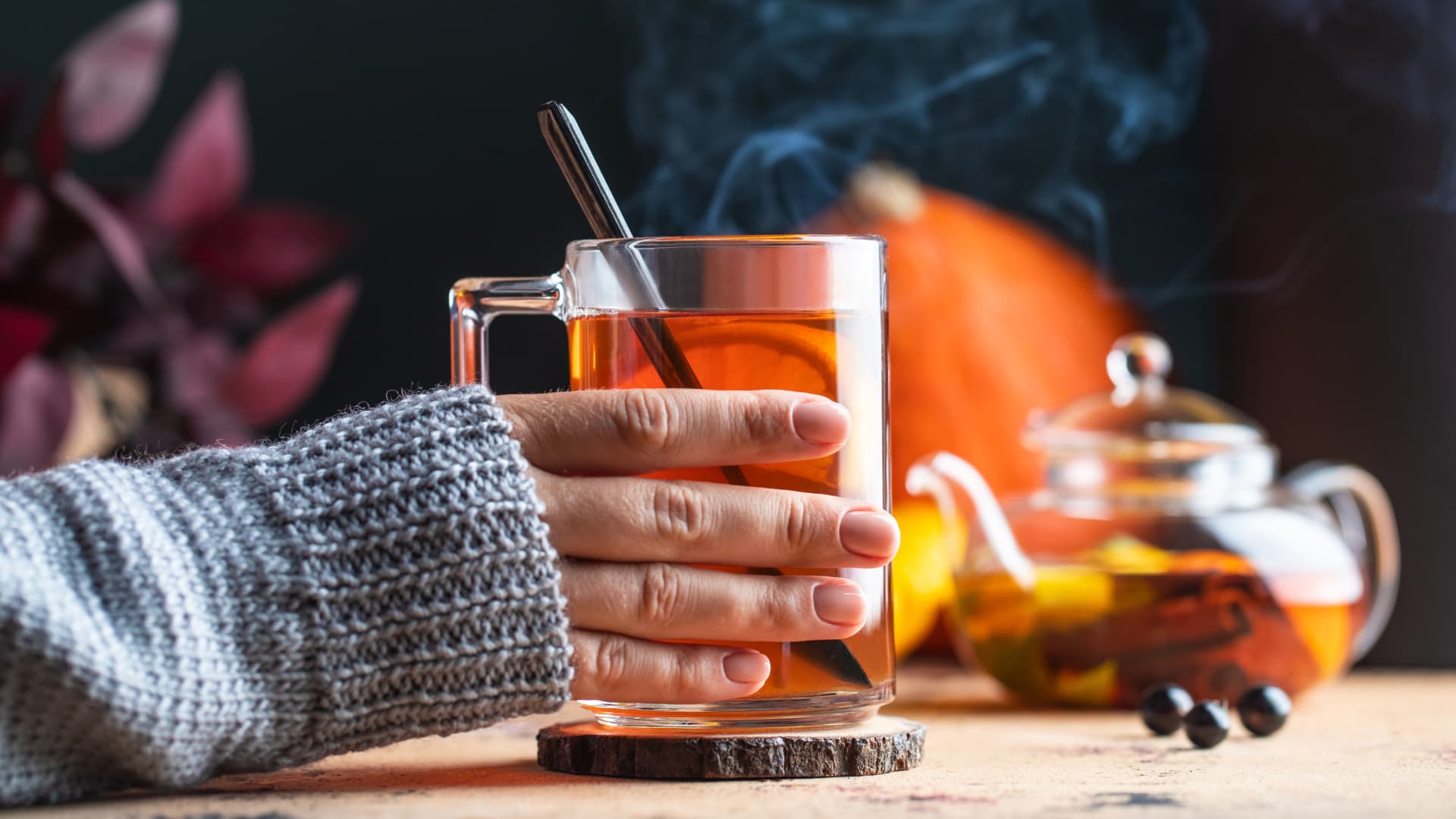
Why we're talking about date and ginger tea
A client recently forwarded me a viral post. It showed steaming tea with red dates and ginger, and claimed the drink was backed by clinical trials on inflammation and gut health. Her question was one I hear often: "If it's on social media and sounds scientific, why don't we just do it?"
It's a fair question. This article is part of a series where I take the claims you see in your feed, sort out what holds up, and show you how to use the good parts well. (Earlier in the series: the science of humming and red light therapy for pain.)
Is ginger tea anti-inflammatory? What the post gets right, and where it overreaches
Every individual sentence in the post is defensible. The problem is the leap from "studied" to "this cup will do it."
| Claim | What the evidence shows | Strength |
|---|---|---|
| Ginger lowers inflammatory markers (CRP, TNF-α) | True in meta-analyses, but using concentrated supplements of about 1–3 g ginger powder daily for weeks | Good, at supplement doses |
| Ginger helps digestion | Best for nausea; moderate evidence for indigestion and stomach emptying | Good |
| Dates provide fiber and polyphenols | True, but the fiber stays in the fruit unless you eat it | Solid fact, small effect in tea |
| Polyphenols influence gut microbes | Mostly lab and animal research so far | Early |
One more detail: the dates in the photo are Chinese red dates, also called jujubes, not the Medjool dates most Americans picture. Jujube and ginger tea is a centuries-old warming tonic in Traditional Chinese Medicine. Tradition and modern research both support it as gentle and soothing. Neither supports it as a cure.
How to read a health claim in your feed
These four questions will sort most posts in under a minute:
- What dose was studied? Trials often use capsules or extracts far stronger than a kitchen recipe.
- Who was studied? Lab cells, mice, and people are three very different levels of proof.
- What does "studied for" really mean? Being studied is not the same as being proven.
- Who benefits from the post? Many accounts earn money from clicks and shares, so the more dramatic the claim, the more it spreads.
None of this means the food is useless. It means you should expect a gentle benefit, not a miracle.
Four warming ginger tea recipes for fall
As the weather cools, these drinks give you warmth, comfort, and a genuine nudge toward better digestion. Each makes about 4 cups. In every recipe, eat the softened fruit or blend it back in, because that is where the fiber lives.
1. Red date (jujube) ginger tea
- 8 dried red dates, rinsed and slit open
- 20 g (about a 2-inch piece) fresh ginger, thinly sliced
- 5 cups water; 1 tbsp goji berries and raw honey are optional
Simmer the dates, ginger, and water covered for 30 minutes. Add goji for the last 5 minutes, and stir in honey once it has cooled slightly.
What to expect: A mild, naturally sweet tea that settles the stomach and warms you from the inside. This is the traditional version from the viral post.
2. Medjool date ginger tea
- 4 Medjool dates (or 6 Deglet Noor), pitted and chopped
- 20 g fresh ginger, thinly sliced, and 1 cinnamon stick
- 4 cups water and 1 tbsp fresh lemon juice
Simmer the ginger and cinnamon for 10 minutes, add the dates, and simmer 10 minutes more. Stir in the lemon, then strain, or blend for a thicker drink.
What to expect: A rich, caramel-like drink with good ginger strength. It is sweeter, so treat it as a dessert-style cup.
3. Prune ginger tea
- 6 prunes (dried plums), halved
- 20 g fresh ginger, thinly sliced
- 4 cups water and a strip of orange peel
Simmer everything together for 15 minutes, then eat the softened prunes with the tea.
What to expect: The most digestive-focused of the four. Prunes have strong clinical evidence for relieving constipation, more than dates do.
4. Asian pear ginger tea
- 1 Asian pear, cored and sliced, skin on
- 20 g fresh ginger, thinly sliced
- 4 cups water; honey is optional
Simmer the pear and ginger for 20 minutes. Eat the soft pear slices.
What to expect: A light, soothing drink traditionally used for the throat in dry autumn weather, with gentle pectin fiber from the skin.
Who should check with their doctor first
These drinks are safe for most people, but a few situations call for care:
- Blood thinners: Ginger can mildly add to the effect of warfarin and similar medications.
- Gallstones: Ginger stimulates bile flow, so ask your doctor first.
- Diabetes or blood sugar concerns: Dates and prunes are sugary, especially when you eat the fruit. Favor the pear version and skip the honey.
- Heartburn: Large amounts of ginger can aggravate reflux in some people.
A reflection for your fall routine
The best wellness habits are rarely dramatic. They are small, warm, repeated acts of care. A daily cup of ginger tea won't replace medicine, but it can become a moment to slow down and check in with your body.
The next time a post promises big results from a simple food, pause and ask yourself: What is this really offering me, and what am I hoping it will fix? Often the honest answer points to something worth exploring more deeply.
If you're unsure whether something you've seen online fits your situation, bring it to your next session. Sorting the helpful from the hype is part of what I'm here for.
Questions people ask about ginger tea
Is ginger tea anti-inflammatory?
Not in the way social media suggests. Studies showing lower inflammatory markers like CRP and TNF-α used concentrated ginger supplements of about 1–3 g daily for weeks, far stronger than a cup of tea. A daily ginger tea is a gentle, warming habit, not an anti-inflammatory treatment.
What is ginger tea good for?
Ginger's best evidence is for nausea, with moderate evidence for indigestion and stomach emptying. As a warm drink, ginger tea can settle the stomach and become a daily moment to slow down.
What is red date (jujube) tea?
Red dates are Chinese dates, also called jujubes, not the Medjool dates most Americans know. Jujube and ginger tea is a centuries-old warming tonic in Traditional Chinese Medicine: gentle and soothing, but not a cure.
What is the best ginger tea for digestion?
Of these four recipes, prune ginger tea is the most digestive-focused, because prunes have strong clinical evidence for relieving constipation. Eat the softened prunes with the tea, since that is where the fiber lives.
Who should not drink ginger tea?
Check with your doctor first if you take blood thinners such as warfarin, have gallstones, or get heartburn, since large amounts of ginger can aggravate reflux. If you're managing blood sugar, favor the pear version and skip the honey.
Take the next step. Sometimes what we hope a food will fix is really something else asking for attention. The free Effortless quiz takes about a minute. It names the pattern that's been quietly costing you energy and sends you a short guided meditation made for it. Take the free quiz →