
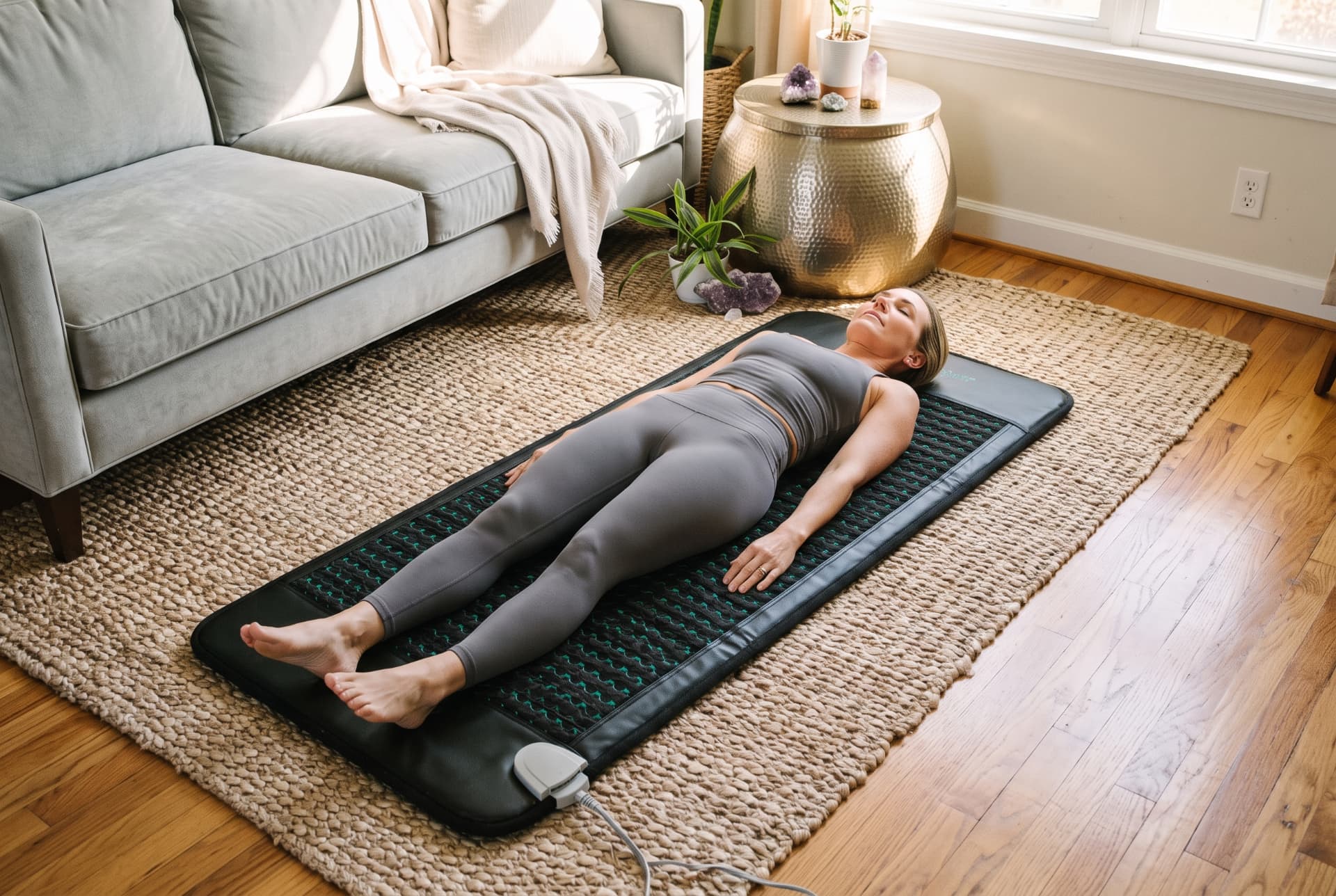
I have lived with chronic discomfort in my back since an injury in 2004, and the PEMF chair mat makes all the difference for me. I use it every day, morning and night, because it's there, it's convenient, and it's comfortable. Any time I sit down, whether to read, do computer work or anything else, I'm on my chair mat.
How I Came to It
I have used red light therapy since 2012, when several of my doctors suggested it, and I've taken training classes on many different devices. My interest was personal in the beginning. Then I realized how many people this kind of therapy could help, and I did what is in my nature: I researched the companies around the world, narrowed them to three, and vetted each one. That meant buying their products and using them faithfully, for myself and my family, before I was comfortable recommending anything to anyone else.
There are a lot of products on the market, with a wide range of recommendations and claims. That made me leery of all of them until I could prove them myself. I wanted to know that I knew that whatever I said came from repeated, replicable observation and results. I also stay in conversation with medical doctors, locally and around the country, to make sure I'm not missing something and to share what I'm observing with them.
What a PEMF Mat Is
PEMF stands for pulsed electromagnetic field. A PEMF mat delivers gentle, low-level electromagnetic pulses through a pad you lie or sit on. Cleveland Clinic describes PEMF as a complementary therapy used for pain and other symptoms, offered both in clinics and through at-home devices.
The chair mat I use combines PEMF with far-infrared heat and is infused with amethyst and tourmaline crystals.
PEMF is not red light. With every red light device, the light needs to go against bare skin. With a PEMF mat, you can stay fully dressed. (If red light is what you're considering, I've written about red light therapy for pain.)
What the Research Says
The honest answer is promising, but early. A 2016 review of six randomized trials concluded that PEMF "seems to be able to relieve the pain intensity and improve functionality" in people with low back pain, and called for larger, better-standardized studies. Cleveland Clinic notes that PEMF is still being studied, that there is no definite proof it works, and that some of the benefit people report may be placebo.
So I share what I have observed in myself and in the people I work with, and I let the research speak for itself.
How I Use Mine
I keep it where I sit. That's the whole secret. One doctor I know uses PEMF twice a week for his own chronic back pain, and he tells me his only limitation is time. That is exactly why I keep mine at home, where it's simply part of my regular schedule.
Most of my clients who sit on it during a session want one at home, because they see the value of being able to use it every day.
The one thing I wish were different: I can't travel with it. It's just a few inches too big to fit in my suitcase.
Who Should Skip It
PEMF is considered safe for most people, but not for everyone. Cleveland Clinic advises avoiding it if you:
- are pregnant
- use a medical device such as a pacemaker, insulin pump or other implant
- take medication through a patch on your skin
- have epilepsy
Check with your provider before you start, and follow the maker's guidance for your device. Persistent or worsening pain always deserves a medical evaluation.
Choosing a Mat
There's a wide assortment of PEMF mats, from full-body pads to chair mats, at very different prices. I consider Hooga a high-quality, entry-level brand, and their chair mat is the one I sit on every day.
If you're in pain, or having trouble relaxing because of discomfort of any sort, I highly recommend a consultation before you buy, so we can choose what fits your body and your needs. I offer device consultations as part of my red light work.
Disclosure: I'm an affiliate of some of the brands I recommend, so if you buy a device through me, I may earn a commission at no extra cost to you. I only recommend equipment I use myself.
Questions people ask about PEMF mats
What are the benefits of a PEMF mat?
Small studies suggest PEMF may ease pain and improve function for some people with low back pain, though the research is still early and some of the benefit people report may be placebo. For my own back, the chair mat makes all the difference.
Is PEMF good for back pain?
A 2016 review of six randomized trials found that PEMF seems to relieve pain intensity and improve function in people with low back pain, with larger studies still needed. Persistent or worsening pain always deserves a medical evaluation.
Can you use a PEMF mat every day?
I use mine every day, morning and night. Follow the maker's guidance for your device, and check with your provider before you start.
Does PEMF work through clothes?
Yes. You can stay fully dressed on a PEMF mat. Red light is different: it needs to go against bare skin.
What is the difference between PEMF and red light therapy?
A PEMF mat delivers gentle pulsed electromagnetic fields through a pad, and you can use it fully dressed. Red light therapy uses red and near-infrared light, which needs to reach bare skin.
Who should not use PEMF?
Cleveland Clinic advises avoiding PEMF if you are pregnant, use a medical device such as a pacemaker, insulin pump or other implant, take medication through a skin patch, or have epilepsy. Check with your provider before you start.
Take the next step. Chronic discomfort wears on more than the body. The free Effortless quiz takes about a minute. It names the pattern that's been quietly costing you energy and sends you a short guided meditation made for it. Take the free quiz →